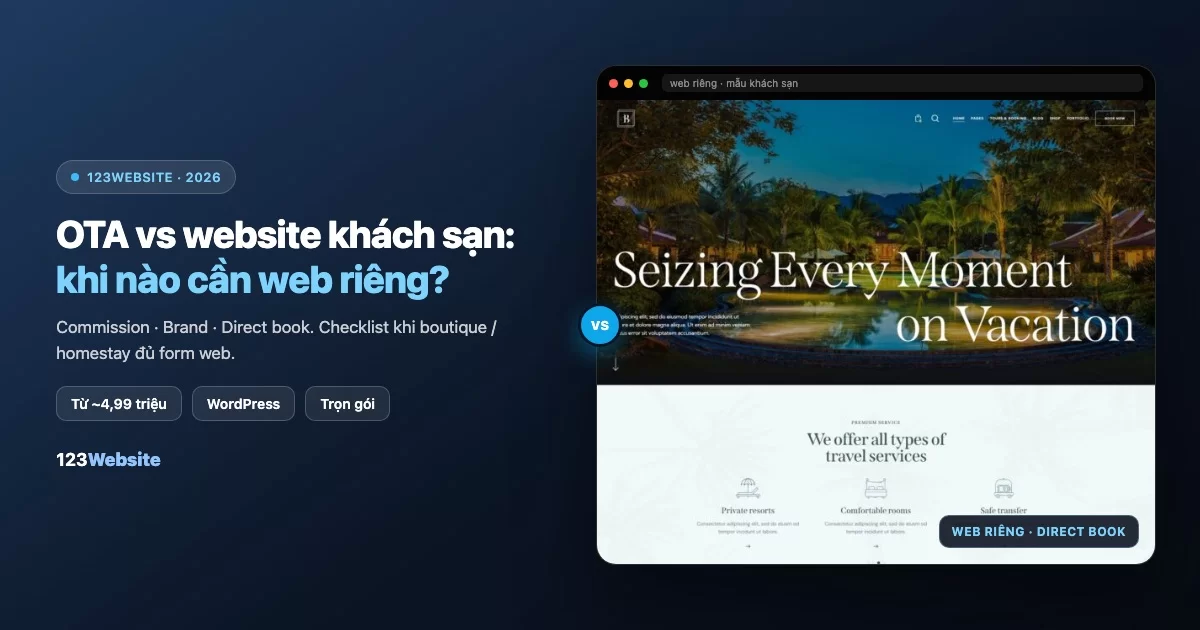
If OTA (online travel agency) bookings are steady, do you still need your own website? The OTA-versus-hotel-website question is not about whether the property next door already has a site. You need to know what you want to add: a fuller presentation of the rooms, a way to take requests directly, or a way for guests to book by date themselves.
Quick summary
- Keep the OTA when that channel is already bringing guests in steadily. The website is an extra channel.
- A direct booking skips the commission, but it still has a cost.
- Advice first: a site with a form and Zalo (Vietnam’s most widely used messaging app). Book now: a booking engine.
- The GOLD package starts at VND 4,990,000. Booking is priced separately.
An OTA is a platform that distributes room bookings, such as Booking.com or Agoda. Your own website adds information and a contact channel. It does not bring guests in by itself.
Keep the OTA when that channel still fits
An OTA has its own flow for search, comparison, and booking.
Note: When you compare an OTA with a hotel website, use the fees and terms in your own contract. Do not apply one commission rate to every hotel.
A website helps guests:
- Search by the property name: see photos, amenities, directions, and the conditions you publish.
- Book again later: a returning guest can review the details before getting in touch.
A direct booking still has a cost
A direct booking does not pay an OTA commission, but it still carries the costs below. Add them up before you compare the two channels.
- Building and running the website
- Advertising
- A booking tool or a payment tool
Prices and offers on the website need to match the distribution agreement you already have. Do not write “always the cheapest” when you have no basis for it.
Match the website to how you take bookings
- If you need to discuss rates and check availability first: a profile site with a form, a hotline, and Zalo is a sensible place to start. The form should say clearly that this is a request waiting for confirmation.
- If you want guests to see availability and book instantly: you need to scope a booking engine, rate data, room data, and the connection to your sales channels.
The article on forms and booking engines separates these two scopes.
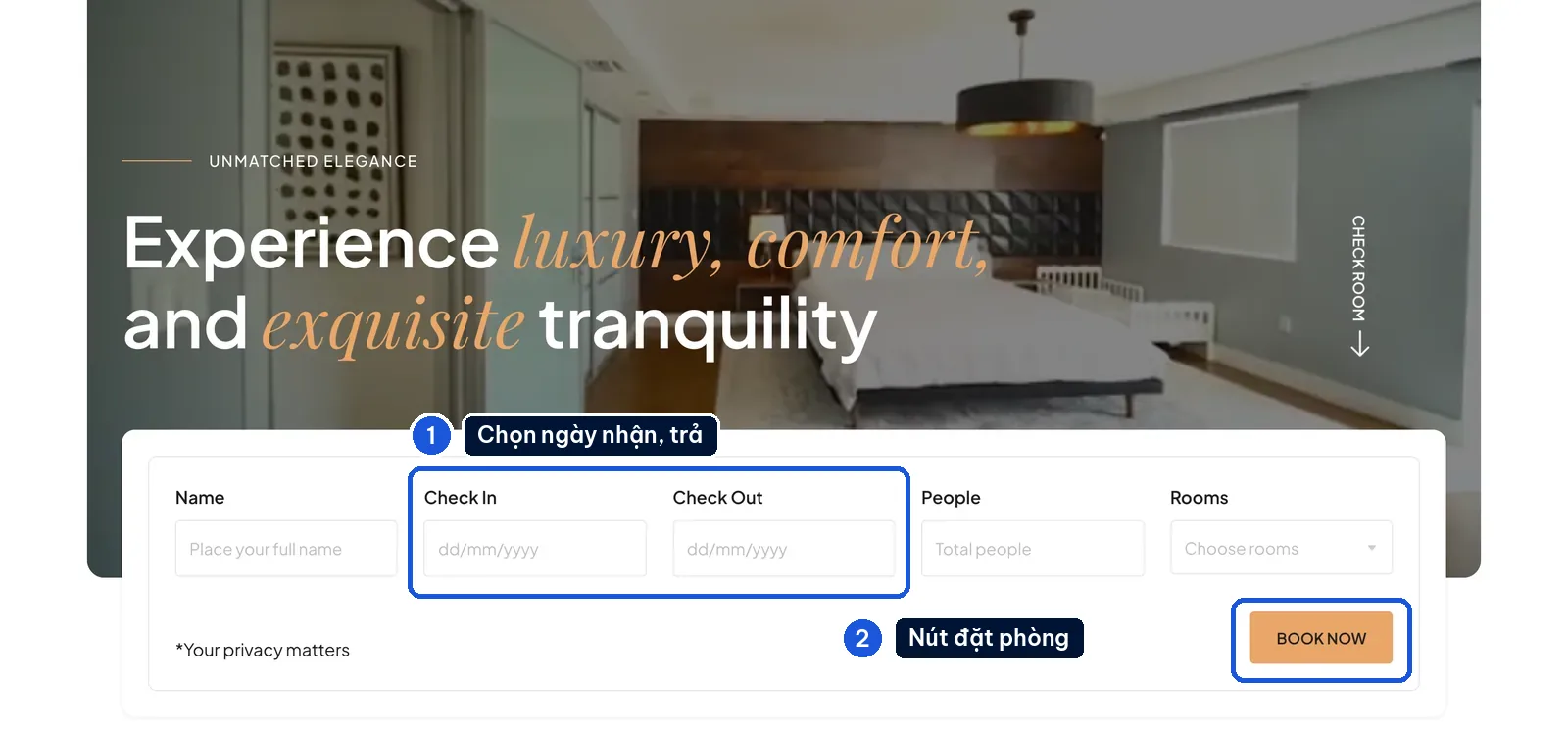
How much to automate should not be decided from the room count alone. A small property that sells through many channels can still need those channels kept in sync. Another property may need someone to advise on a stay package for each guest.
Prepare what guests need to see
- Rooms: photos that match each room type, occupancy, and amenities.
- Location: the address, how to get there, and check-in and check-out times.
- Rates: the rate, or how to request a quote, and the conditions that apply.
- Policies: how the property handles a booking, a change, and a cancellation.
- Who is responsible: who receives requests, and how replies work outside business hours.
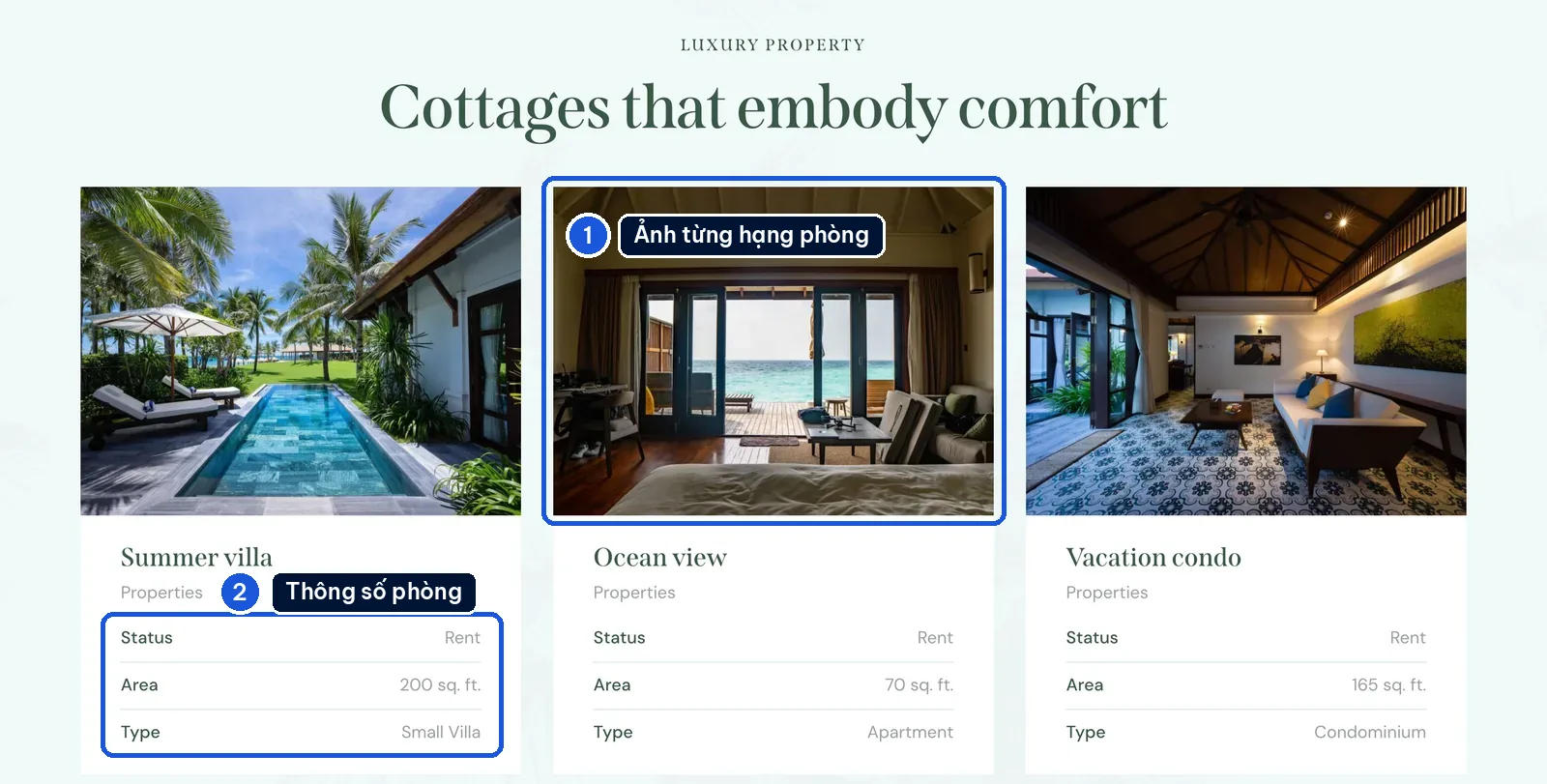
A good photo does not replace a clear policy, and a fast booking tool does not fix room information that is out of date. After handover, someone still has to own the updates.
Price and process at 123Website
123Website’s GOLD package is listed at VND 4,990,000 on the pricing page. The template site, languages, and system connections are scoped per project.
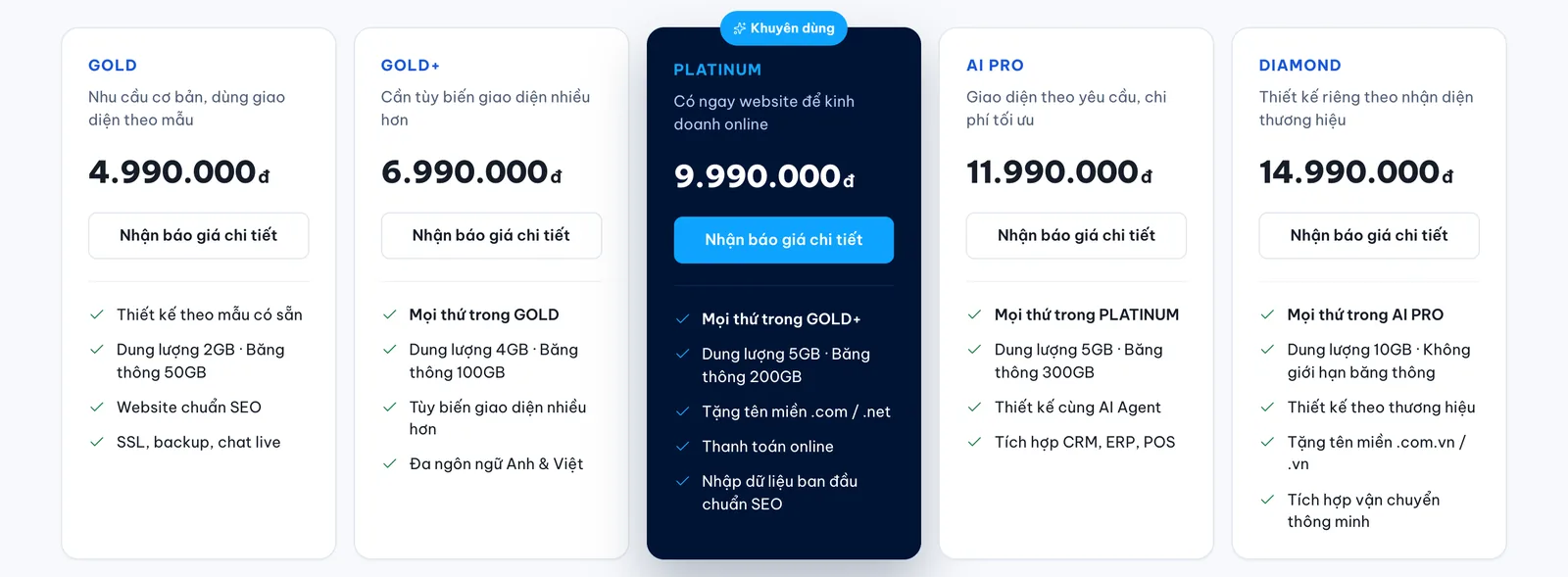
Note: A booking engine or a channel manager is not included in the package by default.
123Website builds the site on WordPress, chooses a template from the room materials, and shows you how to manage the site at handover. In the process, agree who approves rates and conditions before they go on the site. The timeline is set from the data and the features that need to be built.
Templates for comparing room information
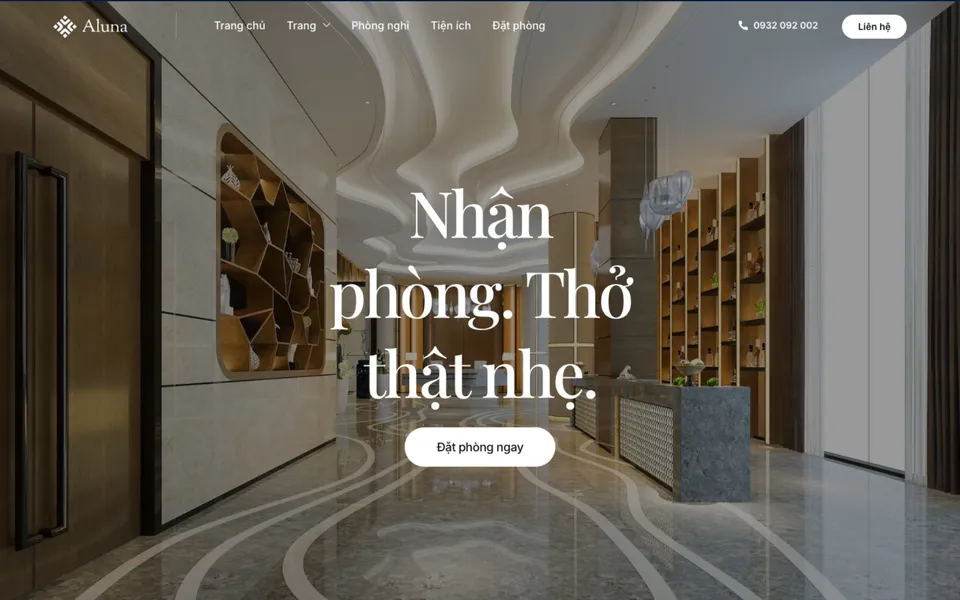
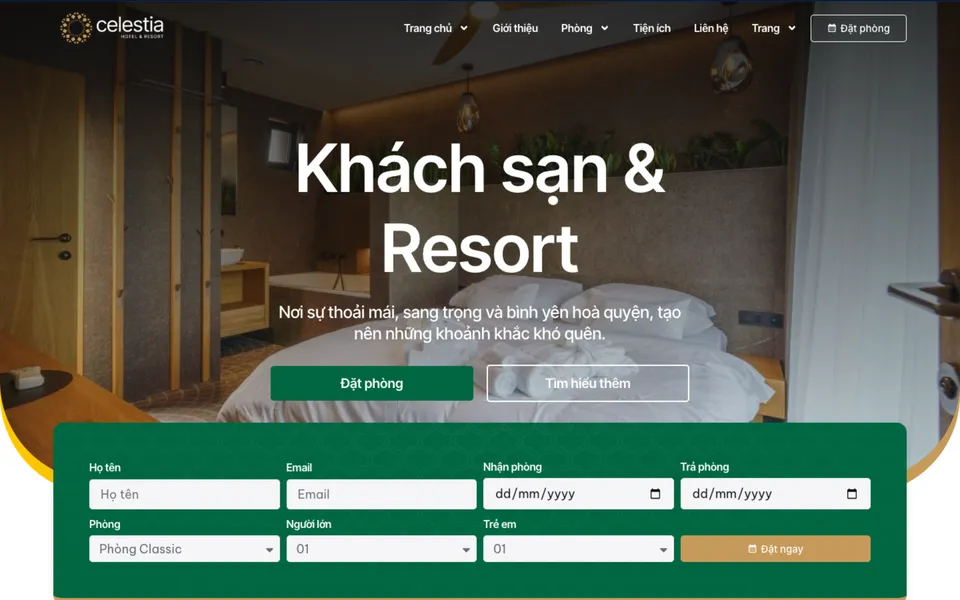
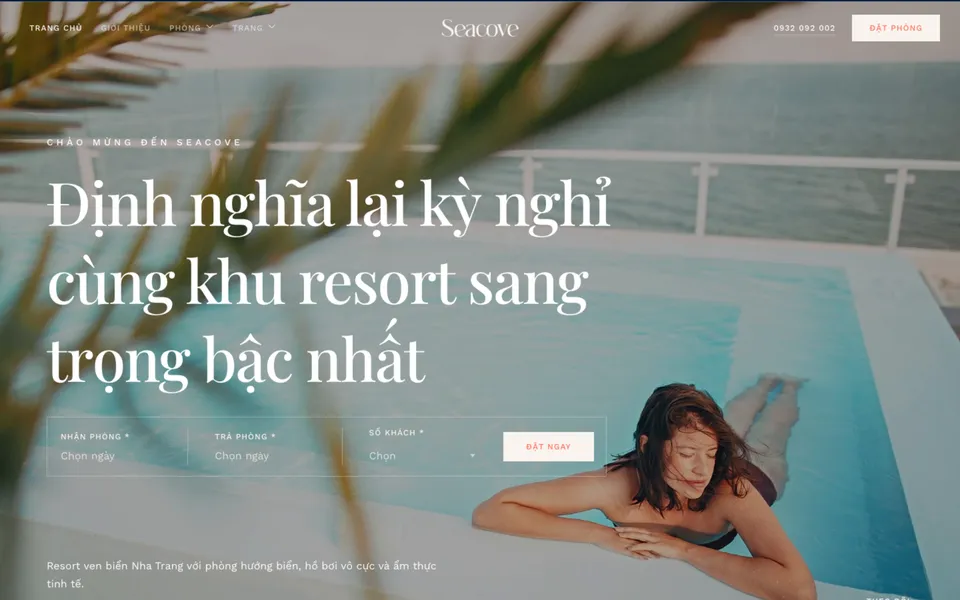
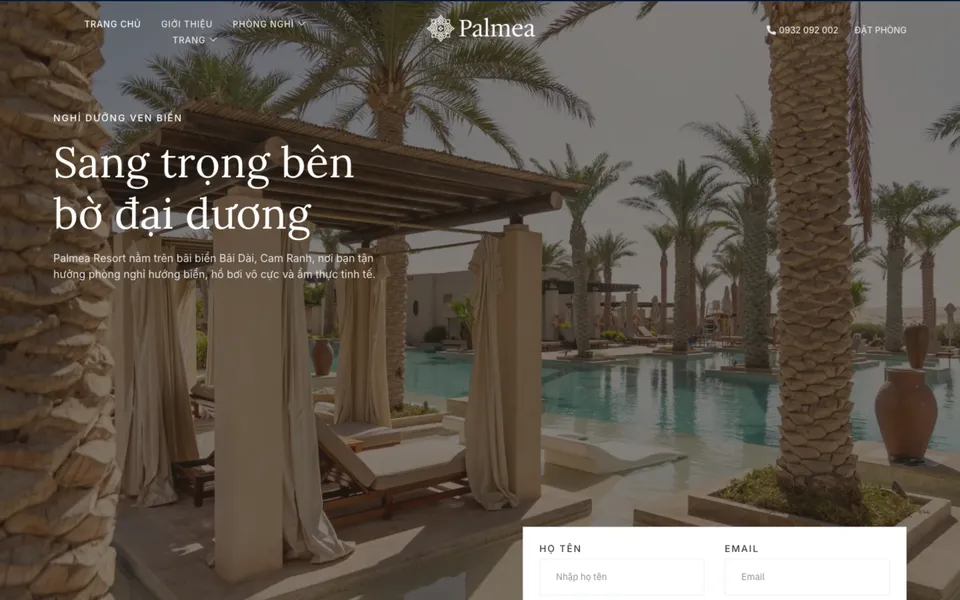
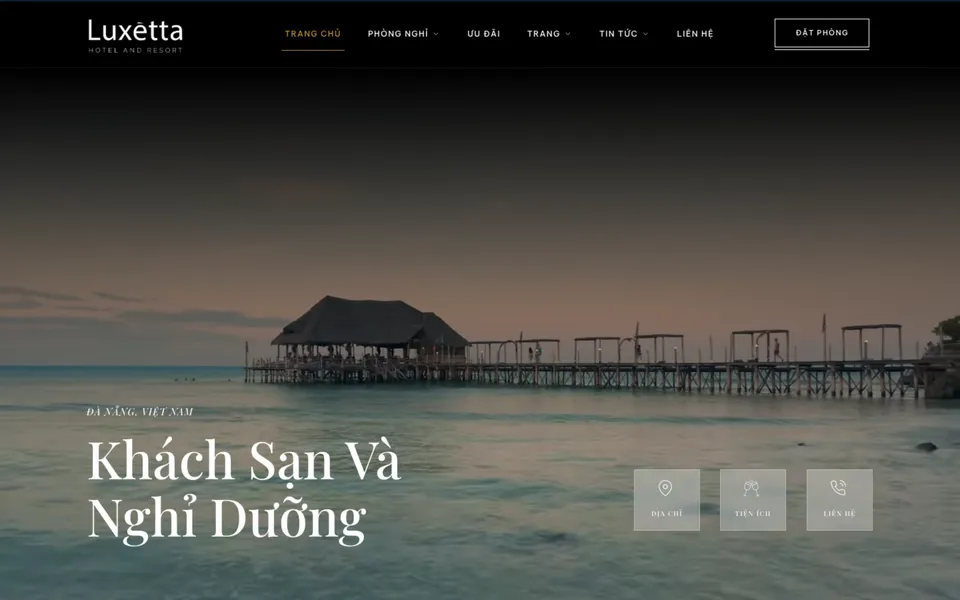
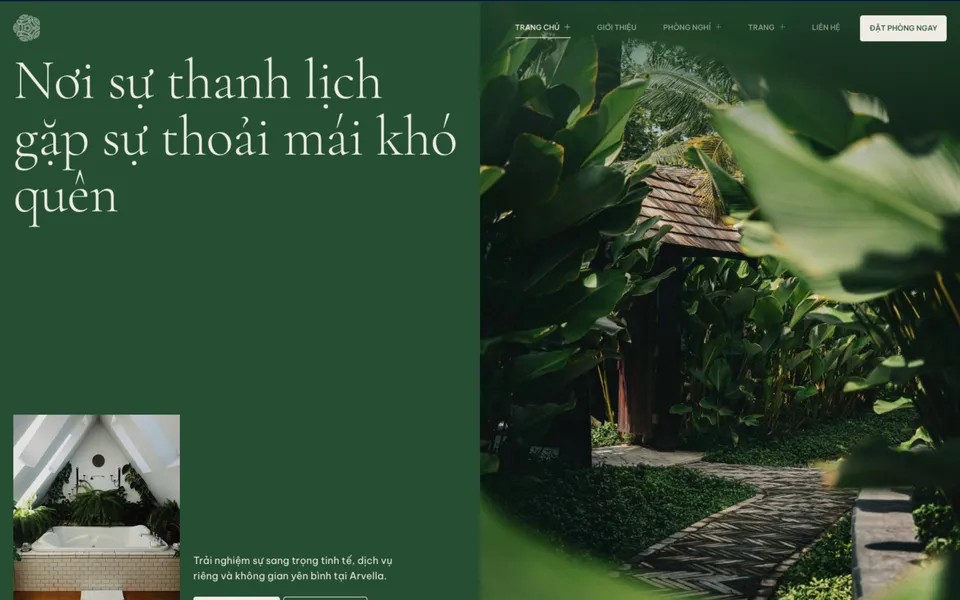
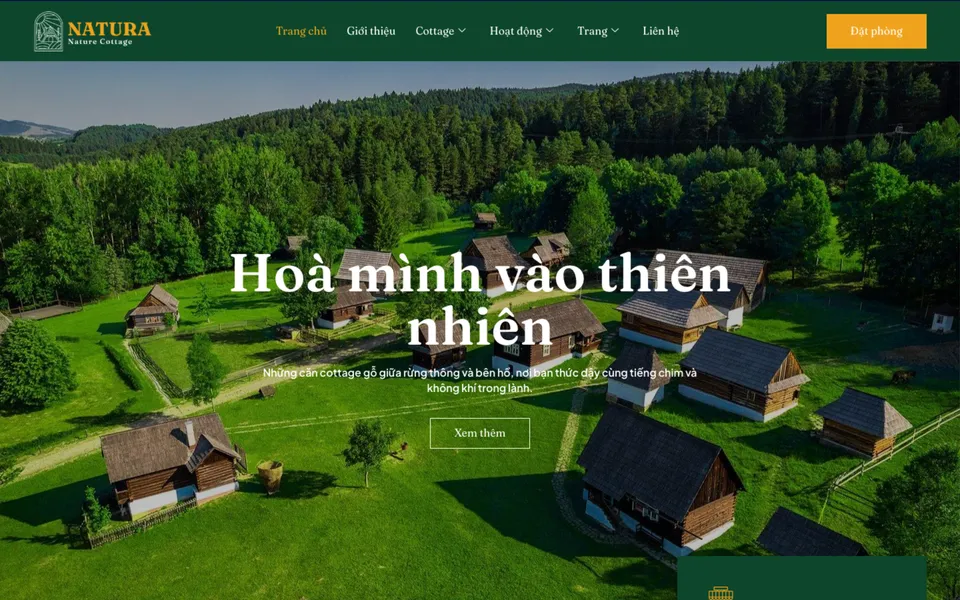

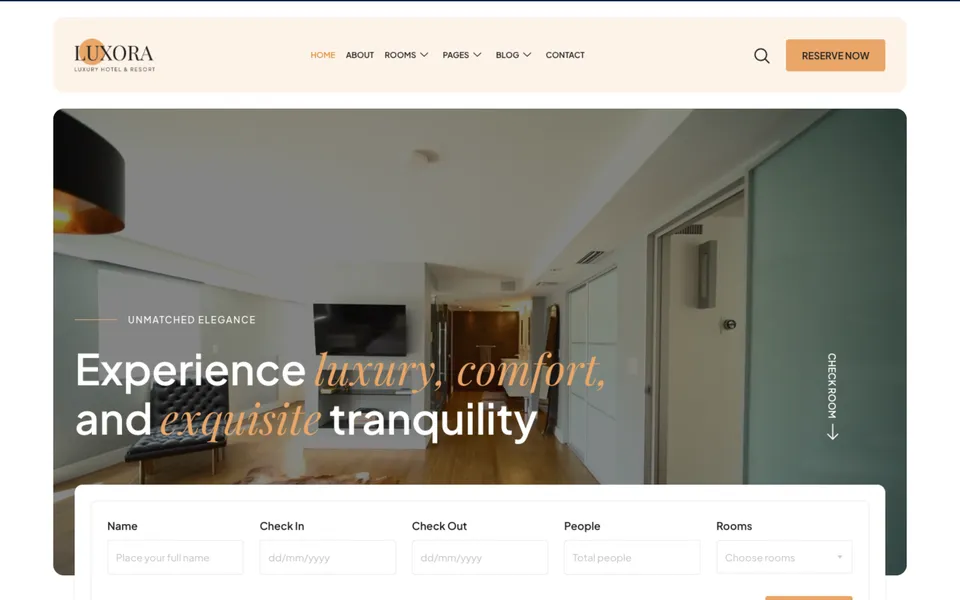
See also the hotel template library and what a hotel website covers. When you send a request, include how you take bookings now and what the OTA does not cover, so the extra website work is clear.
The 123Website team. We have designed websites and business software since 2013, with 2,000+ projects delivered.